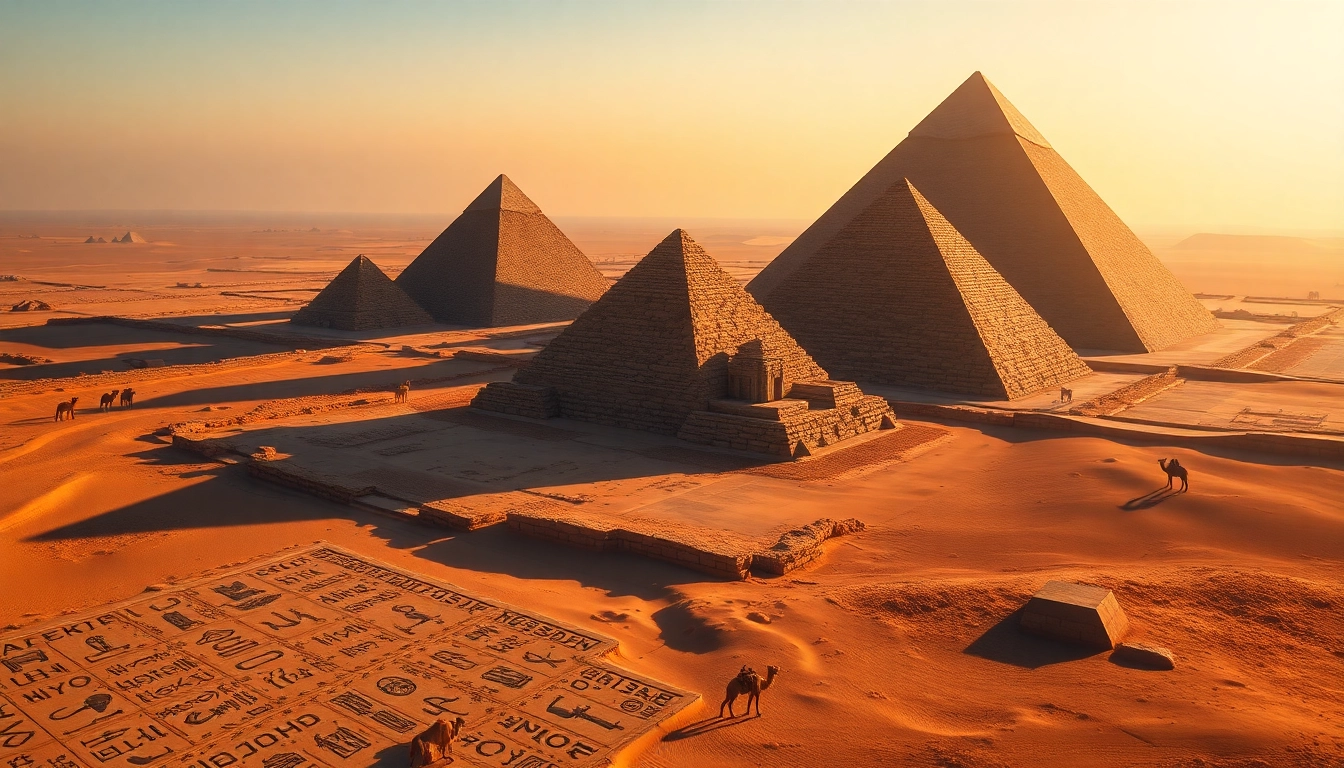
The Historical Significance of the Pyramids
The Egyptian pyramids stand as awe-inspiring symbols of ancient innovation and power, captivating the imagination of people around the world. These massive structures, primarily built as tombs for pharaohs, reflect the cultural and spiritual beliefs of their time. They connect us to a civilization that had a profound understanding of architecture, mathematics, and astronomy.
The pyramids, particularly the Great Pyramid of Giza, have intrigued scholars, tourists, and those fascinated by history alike. For a deep dive into their significance, consider checking out https://piraminds.com/, which offers comprehensive insights into these monumental edifices.
Origins and Construction Techniques
The origins of the Egyptian pyramids date back to the 27th century BCE, evolving from earlier mastaba structures. The construction techniques employed were revolutionary, showcasing the advanced engineering and organizational skills of ancient Egyptians. The workforce was massive, consisting not of slaves as once popularly believed, but of skilled laborers who worked in shifts and were fed and housed by the state.
The most notable construction technique involved the use of large limestone and granite blocks, which were cut from quarries and transported to the sites with remarkable ingenuity. Theories suggest they used sledges, lubricated with water, to move these heavy stones, along with the construction of ramps to elevate them to required heights. Each layer of the pyramid was meticulously aligned to the cardinal points, reflecting both practical construction needs and religious significance.
Cultural Impact on Ancient Society
The pyramids were not merely tombs; they represented the pinnacle of Egyptian civilization’s achievements and constructed an enduring legacy. They symbolized the pharaoh’s divine right to rule and served as a testament to their power and influence. The labor involved in their construction highlights the socio-political structure of ancient Egypt, where that effort was seen not just as a civic duty but also a religious obligation.
Moreover, the pyramids influenced subsequent architectural designs and inspired civilizations worldwide. Their grandeur has cemented their place in world history, demonstrating the Egyptians’ profound understanding of geometry and cosmic alignment.
Archaeological Discoveries
Over the years, archaeological discoveries around the pyramids have unearthed numerous artifacts, inscriptions, and burial practices that provide insight into the societal beliefs of ancient Egyptians. Excavations at Giza and surrounding areas have revealed tombs, ceremonial sites, and even remnants of the workers’ villages, offering a more complete picture of life during the pyramid era.
Notable discoveries include model boats used in burial ceremonies, showing the significance of travel to the afterlife, and various inscriptions that illustrate the beliefs surrounding death and resurrection. These findings have enriched our understanding of ancient religious practices and social customs, painting a vivid portrait of a society that revered life, death, and everything in between.
Architectural Marvels: Structure and Design
Key Features of Pyramid Architecture
The design of the pyramids is characterized by their geometric form and precise alignment. The advantages of their pyramidal shape include not only structural integrity but also symbolic meanings associated with the Sun and the journey of the deceased pharaohs toward the afterlife.
Each pyramid typically consisted of three parts: the base or lower chamber, a middle section with diminishing dimensions, and ultimately a small apex. The interiors often featured elaborate burial chambers adorned with hieroglyphs, designed to protect and honor the deceased.
Materials used varied, with the core generally being made from local limestone, while the outer casing was crafted using finer Tura limestone or granite, giving the pyramids their smooth, shining exterior that glimmered in the sunlight.
The Role of Mathematics and Astronomy
The ancient Egyptians were adept in mathematics and astronomy, as evidenced by the pyramids’ construction and orientation. The precise alignment of the pyramids with celestial bodies, especially the North Star, indicates an advanced understanding of astronomy. This alignment was believed to help the pharaoh’s spirit ascend to the heavens upon death.
Additionally, the use of mathematics in measuring and constructing these monumental edifices speaks volumes about the Egyptians’ knowledge of geometry. Pyramid dimensions often reflect a sophisticated grasp of ratios, similar to those found in modern engineering and architecture. This mathematical precision ensured that the structures stood the test of time, a feat that continues to marvel architects and engineers to this day.
Comparison to Other Ancient Structures
When comparing the Egyptian pyramids to other ancient structures, such as the ziggurats of Mesopotamia or the step pyramids of the Maya, remarkable similarities and differences emerge. Like the pyramids, the ziggurats served religious purposes but were characterized by their tiered structure and flat tops. In contrast, the pyramids represented a singular, unified form that culminated in a pointed apex, symbolizing the connection to the divine.
Meanwhile, the architectural style of the Maya was influenced by their unique cosmology, focusing on multi-layered designs often punctuated with grand staircases. Thus, while each civilization possessed its own architectural idiosyncrasies, the enduring legacy of the pyramids highlights the diversity of human ingenuity across cultures.
The Role of the Pharaohs in Pyramid Construction
Pharaohs Behind the Great Pyramids
Pharaohs played an integral role in the construction of pyramids, viewing these massive structures as essential to their immortality. The most famous pyramid builders were Pharaoh Khufu, whose Great Pyramid at Giza remains one of the Seven Wonders of the Ancient World, and Pharaoh Sneferu, who is credited with the development of the pyramid form.
Khufu’s great undertaking, involving an estimated workforce of thousands, demonstrated his command and the centralized authority of the state. The proximity of such construction to politics showcases how integral these projects were to a pharaoh’s legacy and public image.
Burial Customs and Afterlife Beliefs
Deeply intertwined with pyramid construction were the religious beliefs surrounding death and the afterlife. The Egyptians believed in a complex afterlife, where the soul would be judged by Osiris. Pyramids served both as grand final resting places for pharaohs and as significant markers for their journey in the afterlife.
Burial customs were elaborate; tombs were furnished with items necessary for the afterlife, including food, weapons, and jewelry, reflecting the deceased’s wealth and status. The meticulous preparations highlighted the Egyptians’ beliefs in life after death, emphasizing the pyramids not merely as tombs, but as gateways to eternity.
The Socioeconomic Impact on Labor
The construction of the pyramids necessitated a vast organization of labor and resources. This endeavor benefited the economy and social structure, as it provided work for thousands of skilled and unskilled workers, fostering a sense of community and shared purpose.
While modern narratives often depict the labor force as enslaved individuals, archaeological evidence suggests a more complex involvement of workers who were likely paid, stationed in well-structured camps with amenities. This dynamic underscores how pyramid construction contributed not only to monumental architecture but also to societal cohesion and economic stimulation.
Pyramids in Modern Culture
Pyramids in Literature and Film
The fascination with pyramids has permeated literature, film, and popular culture, inspiring countless works that explore their mysteries and histories. Movies like ‘The Mummy’ and documentaries reveal public intrigue regarding the pyramids, while literature often romanticizes ancient Egypt’s grandeur and mystique.
Moreover, the concept of pyramids as enigmatic structures continues to serve as an effective narrative device, often symbolizing hidden knowledge or the juxtaposition of misfortune and fortune, evidencing their impact on cultural storytelling.
Tourism and Economic Influence
The pyramids are a significant attraction in Egypt, drawing millions of tourists annually. This influx stimulates local economies, generating jobs in tourism, hospitality, and transportation. The revenue generated additionally supports preservation efforts, ensuring the pyramids are maintained for future generations.
However, with the rising number of tourists comes the challenge of balancing conservation efforts while accommodating the needs and interests of visitors. Sustainable tourism practices must be implemented to protect these ancient structures for posterity.
Preservation Efforts and Challenges
Preserving these monumental structures poses numerous challenges, including environmental factors such as erosion and human-induced damage. Efforts are underway to employ modern technology and traditional conservation methods in order to protect the pyramids against further deterioration.
International collaborations involving archaeologists, historians, and local authorities are key in these preservation efforts, ensuring the pyramids endure as testaments to ancient ingenuity and cultural significance for generations to come.
FAQs about the Pyramids
What is the purpose of the Egyptian pyramids?
The Egyptian pyramids were primarily built as tombs for pharaohs to facilitate their journey into the afterlife.
How were the pyramids constructed?
Pyramids were built using large blocks of stone with advanced techniques for transporting and stacking them, along with skilled labor forces.
Why are the pyramids aligned with the stars?
The pyramids’ alignment corresponds to celestial bodies, suggesting that ancient Egyptians possessed extensive astronomical knowledge.
What materials were used for pyramid construction?
Main materials included limestone and granite, sourced from nearby quarries and transported to sites, showcasing advanced engineering.
Are there any undiscovered pyramids?
Recent archaeological efforts indicate there may be hidden pyramids and structures, with ongoing discoveries continually enriching history’s narrative.